
This idea started long before Shasta Senior Solutions existed…
In 2009, my husband—who is also a nurse—and I were trying to help our elderly parent who wasn’t doing well… while living on the other side of the country.
We knew what questions to ask. We understood the system. And when we could, we got on a plane and went to help. But we couldn’t stay there forever.
We even talked about moving back east to be closer—but the reality was, our careers and responsibilities here wouldn’t allow it.
And that’s when the conversations started…
What if there was someone local—someone knowledgeable—who could step in and help families like ours.

Someone who could be there when you couldn’t. Someone who understood the
medical side, but could explain things in a way that actually made sense.
Back then, we even had a name for it: Shasta Elderly Solutions. At the time, it just wasn’t the right season of life to start a business. But the idea never really went away. Because we saw firsthand how overwhelming it can be—even when you have a medical background. And how valuable it is to have someone helping guide the process, ask the right questions, and keep everything on track.
That’s exactly why Shasta Senior Solutions exists today.
Not just as a service—but as something I wish more families had access to when they needed it most.
If you’re navigating something like this and just need guidance, clarity, or an extra set of experienced eyes… I’m here to help.
Why Would Someone Need a Patient Advocate?
Many people have never heard of a patient advocate until they find themselves wishing they had one.
Healthcare can become overwhelming very quickly. A hospital stay, a new diagnosis, several specialists, medication changes, and follow-up appointments can leave anyone wondering, “Where do I even start?”
As a registered nurse, I’ve seen how easy it is for important information to get lost once someone gets home. Families want to help, but they may live out of town, work full-time, or simply not know what questions to ask.
That’s where a patient advocate can help.
I’m not there to replace your doctor or make medical decisions. I’m there to help you understand the plan, stay organized, coordinate care, attend appointments if needed, and be another set of eyes and ears.
Sometimes the biggest difference I can make is simply taking the time to listen, answer questions, and make sure nothing falls through the cracks.
My goal is to help seniors remain as independent as possible while giving their families peace of mind, knowing someone is looking out for them.
Sometimes, having someone in your corner makes all the difference.

When You Are Your Parent’s Healthcare Proxy
Being named Mom’s (or Dad’s) healthcare power of attorney or healthcare proxy may seem pretty straightforward when the paperwork is signed. But someday, you may be asked to make a decision you never imagined having to make for someone you love.
I’ve been there.
I was the healthcare proxy for my own parents, and I had to make some very difficult medical decisions for them. I was fortunate to have a medical background. As a registered nurse, I understood what the doctors were telling me, knew what questions to ask, and understood what the possible outcomes could mean.
But more importantly, I knew my mom and dad. I knew what mattered to them, what they valued, and what I believed they would—and would not—want.
Those decisions weren’t easy. But today, they don’t haunt me. I truly believe I made the decisions my parents would have wanted me to make, and I’m grateful I was able to be there for them when they needed me most.

I also know that most sons and daughters don’t have a medical background. When it’s your mom lying in that hospital bed, it can be hard enough just to think clearly—let alone understand unfamiliar medical terms, weigh different options, and make a decision you may carry with you for the rest of your life.
This is one of the reasons patient advocacy is so personal to me.
As an RN Patient Advocate, I can’t make those decisions for you. But I can sit beside you, help you understand what is happening, help you know what questions to ask, and encourage those important conversations with Mom or Dad before a crisis happens.
What does quality of life mean to them? What matters most to them? What would they want you to know if someday they couldn’t tell you themselves?
And if that day ever comes, my hope is that you can look back and say:
“I knew what mattered to them. I understood the choices. And I made the decision I truly believed they would have wanted.”
Sometimes caring for our parents means becoming their voice when they can no longer speak for themselves. Having the knowledge and support to do that can make all the difference—not only for them, but for you.
A Visit Is More Than Just a Friendly Check-In
When I visit a client, it may look like we're simply sharing a cup of coffee or catching up about their week. While those conversations are important, every visit has a much deeper purpose.
My first goal is to build trust. Trust isn't earned in a single visit. It develops over time through consistency, listening, showing respect, and allowing someone to maintain their dignity and independence. As that relationship grows, clients often begin sharing concerns they may not mention to family or even their healthcare providers. They become more comfortable accepting support, asking questions, and talking openly about what's been difficult.
Once that trust is established, I can better recognize when something has changed.
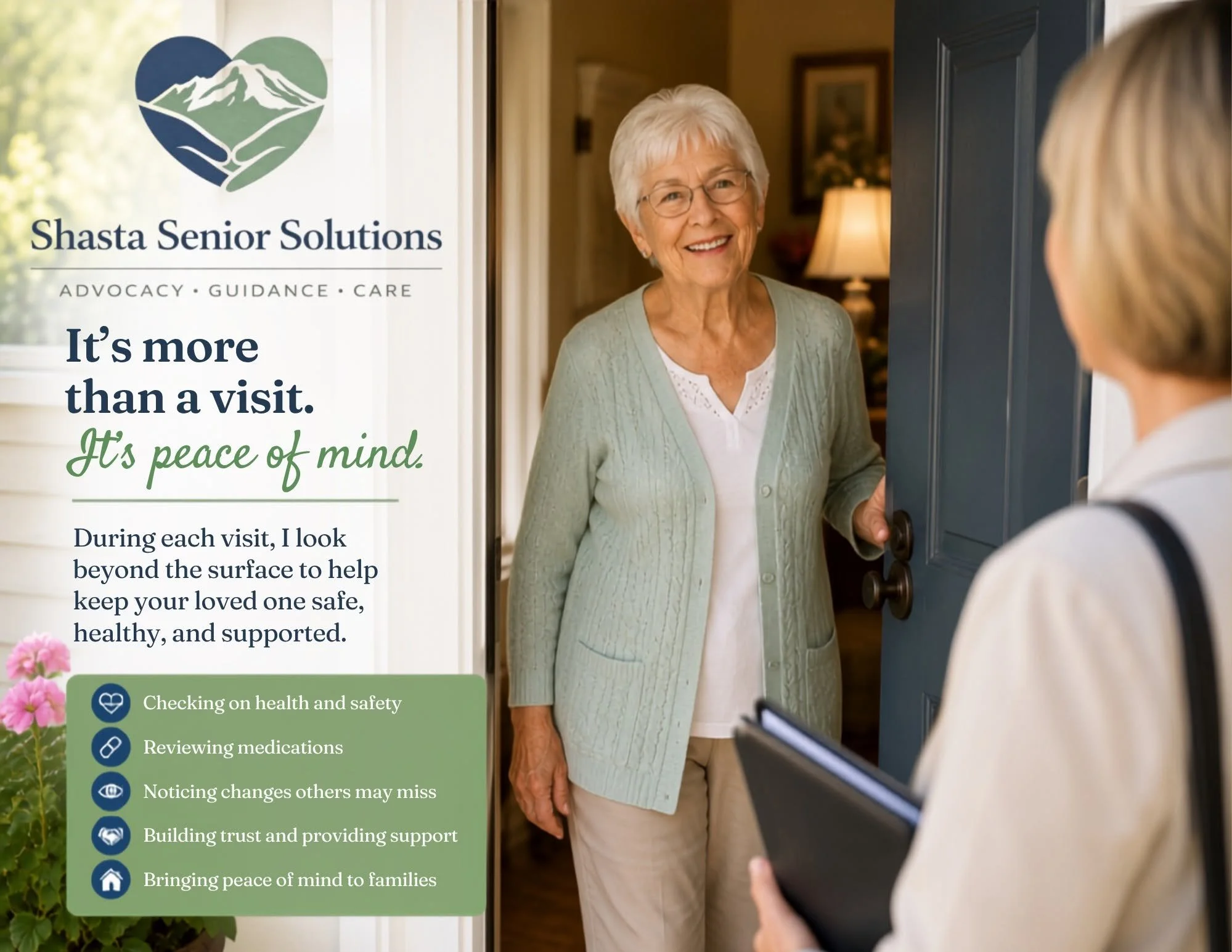
I'm paying attention to much more than our conversation. Are they eating well? Is there fresh food in the refrigerator, or has it expired? Are medications being taken correctly and refilled on time? Has personal hygiene changed? Is the home becoming cluttered or unsafe? Are there signs of a recent fall, new bruises, weight loss, increasing forgetfulness, or difficulty getting around?
Sometimes it's what I don't see that matters just as much. A stack of unopened mail, unpaid bills, an empty pantry, or a calendar filled with missed appointments can be early signs that someone is beginning to struggle.
When I visit regularly, I have the advantage of seeing these gradual changes over time rather than during a single snapshot visit. That continuity allows me to identify concerns early and communicate them with the client, their family, and, when appropriate, their healthcare team before they become larger problems.
My role isn't to take away someone's independence—it's to help protect it. By building trust first and providing ongoing support, I help seniors remain safe, confident, and as independent as possible while giving their families peace of mind that someone is looking out for the little things that matter most.
When Dementia Can Fool You…It's Not Your Fault
One of the things I've learned over the years as a nurse is that early dementia doesn't always look like forgetting names. Sometimes it looks like absolute confidence in a memory that simply didn't happen.
That can be incredibly confusing for families.
Your loved one may tell you they already took their medication, paid a bill, spoke to a family member, or attended an appointment. They aren't necessarily trying to deceive you. To them, the memory often feels completely real.
As a spouse, child, or friend, your first instinct is to believe them. After all, they've always been trustworthy. It can be difficult to recognize when short-term memory loss begins to blur the line between fact and remembered fact.

I've watched families struggle because they don't know where the truth ends and the disease begins. If you've found yourself wondering, "Did that really happen?" or "Should I believe them?"—you're not alone. And most importantly, it's not your fault. Early dementia doesn't always look like forgetfulness. Sometimes it looks like confidence.
Because we love our family members, we naturally want to trust what they tell us. But over time, it's important to gently begin checking facts instead of relying only on memory. That isn't about proving someone wrong—it's about protecting their safety while preserving their dignity.
Sometimes having another set of eyes can make all the difference. A patient advocate or trusted outside person can often help determine what's really happening without putting the family relationship at risk.
One of the things I hear often is, "I just agree with Mom because I don't want to upset her." I understand why. None of us want to argue with someone we love. But in the early stages of dementia, always agreeing isn't always the kindest or most helpful approach.
Many people have heard that you should never correct someone living with dementia. While that approach is often appropriate during the later stages of the disease, early dementia can be very different. When someone is still able to reason, learn, and participate in conversations, gently helping them recall events or discover the correct answer can actually support their independence.
The goal isn't to prove someone wrong or start an argument. It's to guide them with kindness and patience. Instead of saying, "You're wrong," try saying, "Let's look at the calendar together," or "Can we check the pill organizer?" Sometimes simply asking, "Let's see what really happened," gives your loved one the opportunity to work through the memory with you rather than feeling corrected.
One of the challenges I see is that families often begin agreeing with everything because they don't want to upset the person they love. That comes from a place of compassion, and I completely understand why they do it. However, in the early stages of dementia, always agreeing can sometimes create a different problem.
Imagine telling your loved one they're right today, only to have to explain tomorrow that what they remembered wasn't accurate. It's easy to understand why they might respond, "Yesterday you said you believed me. Now you're telling me something different. How can I trust you?" That loss of trust isn't because anyone intended to be dishonest. It happens because the disease changes how memories are formed and recalled, making it difficult for everyone to know where the truth ends and the dementia begins.
This is one of the reasons a patient advocate can be so valuable. Sometimes it helps to have someone outside the family step in, gather information objectively, and help sort through what really happened. An outside perspective can often prevent disagreements, reduce frustration, and protect the relationship between family members while keeping everyone's focus on what matters most—your loved one's safety and well-being.
Every person living with dementia is different, and communication strategies should change as the disease progresses. There are certainly times when reassurance and validation are the most compassionate response. But during the early stages, balancing compassion with gentle reality can help preserve trust, confidence, and independence for as long as possible.
Sometimes the greatest gift we can give our loved ones isn't simply agreeing with them. It's walking beside them with patience, compassion, and honesty while helping them navigate a world that is becoming increasingly confusing.